A Theological Insight Into A Bible Verse Weaponized Against Women
Genesis 3:16b: A Woman's Desire and A Man's Rule?
“To the woman he said, “I will surely multiply your pain in childbearing; in pain you shall bring forth children. Your desire shall be for your husband, and he shall rule over you.” (Genesis 3:16, ESV)
Certain verses in the Bible have been used in ways that the Bible itself never intended. At times, these verses have been weaponized in manipulative ways. At other times, the verses have just been misunderstood and misapplied. Though the intentions may have never been malicious, the impact was nonetheless damaging.
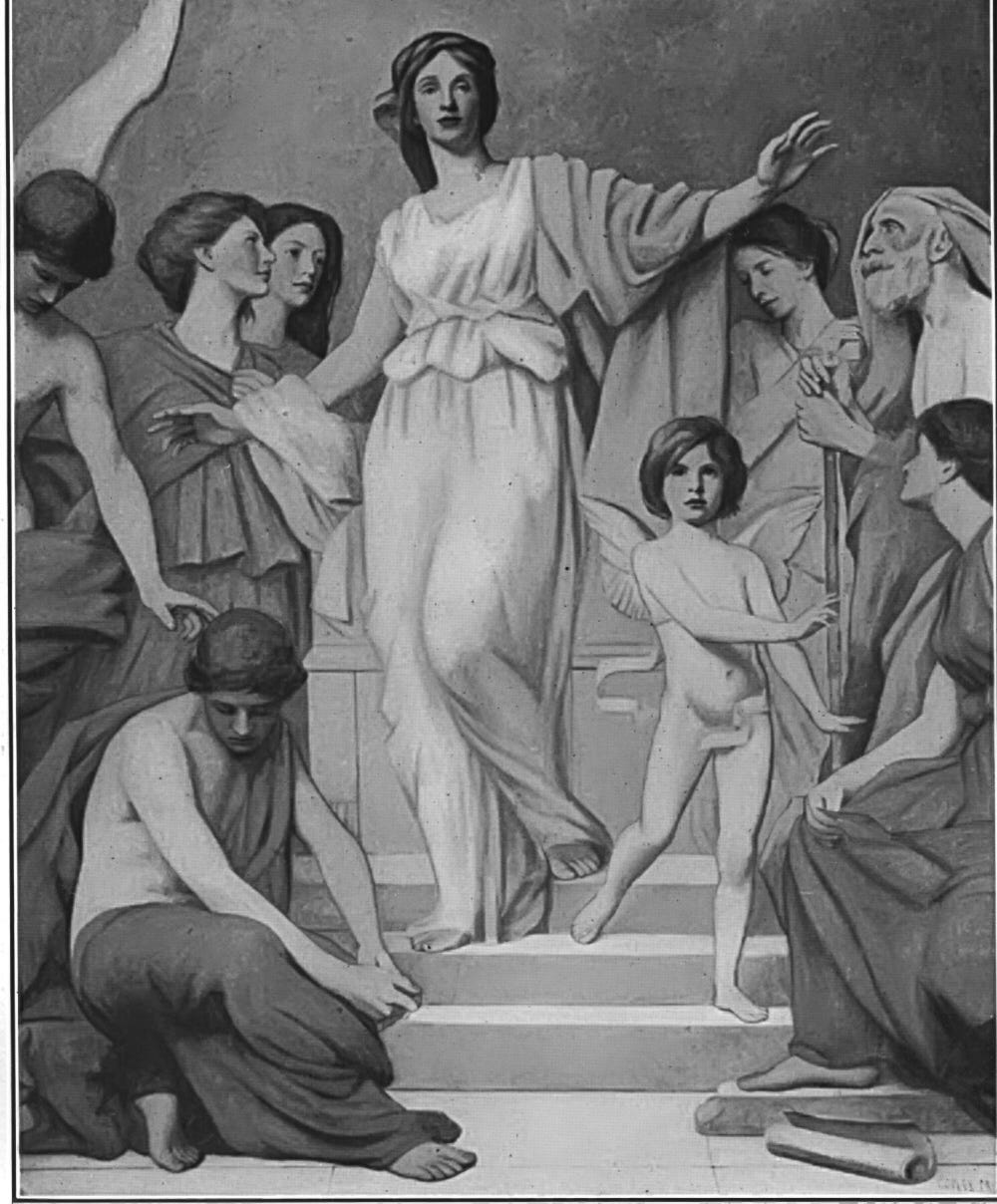
(Source1)
Genesis 3:16 is one of those verses. I want to take a look specifically at the second half of the verse, talking about a woman’s desire and the man’s rule.
Here is how this verse has been weaponized.
Some may say: The consequence of the fall is clear. Women will have a desire to control their husbands, but they need to be in total submission because the husband has to rule over them. This means that women need to be in submission to their husbands. This also means there is a general understanding that men in society are the leaders and women are the followers.
So a woman’s rightful place in the home, in the church, and in society is to be ruled over by men, which will overcome her natural desire to control men. Also, an ambitious woman is sinning because that ambition is evidence of her controlling desire.
WRONG.
The course correct: Let’s do a quick exercise. Look up Genesis 3:16b (the second half of the verse) in a few different translations (ESV, CSB, NASB, NLT). Notice anything? Yeah, there are differences and nuances in the way the language of “control, desires, and rule” plays out in the relationship between men and women.
I’ve heard it said before that “words build worlds,” and the way we read the second half of this verse has built a world that has subjected, silenced, and devalued women in a hierarchy that places them second best to men.
This is not God’s ideal. It is also sinful. Women are not second best. They are not the runner-up. They don’t play an exclusive support role behind the scenes. They are, as Genesis 2:15-16 emphatically declares, also made fully in the likeness and image of God.
But, does the Hebrew language and the overall witness of Scripture affirm this? The first place to start is with the Hebrew language of “control, desire, and rule.” These words work together and are actually about male and female oneness, not hierarchical rule.
The Hebrew word (tesuqa/desire) is only found 2 other times in the OT Gen 4:7; Song of Songs 7:10). Genesis 4:7 provides a negative reading of the desire. However, we should be careful in applying the usage of the word “desire” in the Cain story as similar to what is happening in Genesis 3:16. Genesis 4:7 is a figurative reading while Genesis 3:16 is literal. Additionally, the statements are inverted in the passages. The object of desire, Cain, is also the object of the curse. While the object of the desire for woman, man, is not.2 A better comparison is found in Song of Songs 7:10.
“I belong to my beloved, and his desire is for me.” (Song of Solomon 7:10, NIV)
Here we see similarity with Genesis 3:16 as both are literal expressions. They both address relationships between opposite genders. And finally, the question of the “desire” is abundantly clear as it relates to intimacy. As a hermeneutical principle, we should use the clear to determine the obscure. As Genesis 4:7 adds to the obscurity, we should prioritize Song of Songs 7:10 as a hermeneutical key to meaning. What is that meaning?
Intimacy, not hierarchical rule, is what links the words together.
We need to be careful not to hedge the entire interpretive process on the etymology of the word. Especially knowing there is an ongoing debate on the word, where it is used elsewhere, and how, and the implications. We should also not overlook the fact that there is a surface reading of this verse, which is true when you take into consideration the impact of sin upon all people. Can there be an impulse for a woman to have a “desire” to domineer? Of course. But that desire is not exclusive to women! As one scholar notes,
Woman may desire to dominate or rule over man, but it is not a part of the punishment pronounced upon woman; it is just the essence, character, and result of all sin against God. Self-exaltation and pride always result in the desire to dominate and rule. Every person to some extent desires to dominate and rule over others—not just woman over man.3
The second important word to consider is “rule.”
The Hebrew word (masal/rule) is the regular word for reign or rule, and it does NOT demand a negative context. In fact, if a negative context was implied it would have been placed alongside an adjective like “harsh” or the more aggressive Hebrew word (kabas/to subdue) would have been used and both are missing. This leaves us with a genuine question on what “kind” of “rule” is being described. Nahum Sarna says, “It is quite clear from the description of woman in 2:18, 23 that the ideal situation, which hitherto existed, was the absolute equality of the sexes.”4 Sarna goes on to talk about how a domineering rule is the byproduct of sin.
Derek Kidner says:
The phrase your desire shall be for your husband (rsv), with the reciprocating he shall rule over you, portrays a marriage relation in which control has slipped from the fully personal realm to that of instinctive urges passive and active. ‘To love and to cherish’ becomes ‘To desire and to dominate’5
To suggest that a hierarchy of rule that is domineering and absolute is God’s ideal for this marriage relationship is problematic on many levels. However, to avoid any kind of leadership between a husband and wife also seems to be problematic. Instead of trying to force the text into a binary framework that is comfortable for us today, such as complementarian vs. egalitarian, maybe the better decision is to let us sit with the tension of the text.
A kind of hierarchical rule that is domineering and destructive is contrary to God’s idea. While also acknowledging that even prior to the fall of Genesis three, Adam had a role of responsibility that God held him accountable for.
Therefore, if intimacy and oneness rooted in role and responsibility are the idea, then we have to be careful not to import an idea of domineering and absolute hierarchy as God’s ideal which actually seems to be foreign to the text.
Even more important, if intimacy and oneness are the point, then the world we build with this in mind is quite different from the one that has been constructed to keep women in submission, silence, and subjugation.
Instead, the Biblical picture finds both men and women not in a hierarchy of value (1 vs 2) but in an economy of intimate congruity. Men and women are distinct and find the best in each other together.
And even if you read this and think, Joel, I’m unconvinced. I think this is actually about hierarchy and rule, and submission. I would just ask you to consider this. It seems like the rest of Scripture points to Gen 1:27 and 2:23-24 as normative in gender relationships, NOT 3:16. Jesus affirms this in Mt 19:4, Mk 10:6 - so we return to the gender relationship being about functional one-ness, NOT a hierarchy two-ness.
You may be wondering, “But what about Paul and the whole silence of women?” I’ve written about that also. Check it out.
Horne, Charles, and Julius Bewer. The Bible and Its Story: The Prophets, Isaiah to Ezekiel. Vol. 7. New York, NY: Francis R. Niglutsch, 1909.
Gen 4:7 is notoriously difficult to pin down due to questions about the grammatical gender of, “תְּשׁיּקָתוֹ (“his desire”) the pronominal suffix is masculine. If the antecedent were “sin [חַטָּאת] crouching at the door,” one would expect a feminine pronominal suffix, since חַטָּאת is feminine.” See: Irvin A. Busenitz, “Woman’s Desire for Man: Genesis 3:16 Reconsidered,” Grace Theological Journal 7, no. 2 (1986): 209. Additionally, Gen 4:7 is figurative while Gen 3:16 is literal. This should leave us with caution when it comes to our hermeneutical comparison between the passages.
Irvin A. Busenitz, “Woman’s Desire for Man: Genesis 3:16 Reconsidered,” Grace Theological Journal 7, no. 2 (1986): 208.
Nahum M. Sarna, Genesis, The JPS Torah Commentary (Philadelphia: Jewish Publication Society, 1989), 28.
Derek Kidner, Genesis: An Introduction and Commentary, vol. 1, Tyndale Old Testament Commentaries (Downers Grove, IL: InterVarsity Press, 1967), 76.


