A pastor friend of mine asked a really good question in response to an Instagram reel I posted.
He said, “Do you think Jesus enabled drunkenness with that first miracle? Any thoughts on this?”
I replied on IG, but I wanted to give a bit more because I think this is such a great example of the tension of having real modern questions as it relates to an ancient text that is very much applicable to our context today.
A couple of things we need to consider.
The issue of drunkenness with wine and the concern when it comes to this passage is in part a byproduct of our 21st-century understanding and perception of weddings and partying.
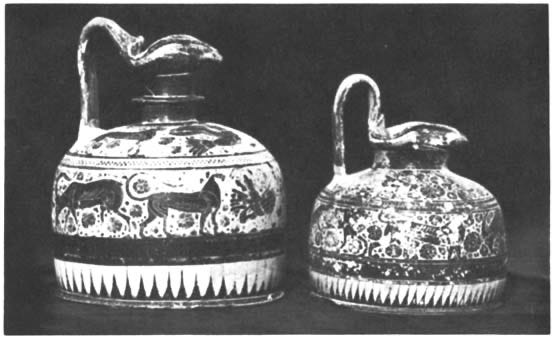
(Oenochoes (wine pitchers or jugs) from Corinth1
We want to try to understand this miracle in John 2:1-11 in its ancient cultural context as well as within the messianic motif that John is developing through his Gospel.
For instance, the motif of “an abundance of wine” was used throughout the Hebrew Bible to symbolize an age of salvation:
“Abundance of wine often was used as a motif to symbolize the age of salvation (Jer 31:12; Joel 3:18; Amos 9:13–14; 2 Bar. 29:5; Sib. Or. 2.317–318; 3.620–623; 744–749) and the coming of the Messiah (Gen 49:11–12).”2
Throughout the OT, drinking of wine is associated with banquet imagery and anticipates the end-time messianic feast with the coming king, exactly what Jesus wants to draw upon in this miracle. Additionally, the Old Testament warns extensively about indulgences with wine and strong drink. Priests were not allowed to drink wine while they served in the temple, not to mention additional passages throughout the Old Testament that communicate the negative impact of drunkenness, such as addiction and poverty.
The phrase “wine and strong drink” shows up together in a negative context throughout the Hebrew Bible.
“Wine and “strong drink” (šēkār, a fermented beverage made from barley and similar to beer) often appear together and are warned against or forbidden (Lev 10:9; Num 6:3; Deut 29:6; Judg 13:4, 7, 14; 1 Sam 1:15; Prov 20:1; 31:4, 6; Is 5:11, 22; 24:9; 28:7; 29:9; 56:12; Mic 2:11; cf. Lk 1:15).”3
In the miracle at Cana, those phrases are not paired. The focus is on the quality of the wine and the quantity of the wine in order to draw the reader - both ancient and modern - to the messianic motif of a wedding feast. In other words, the Bride groom as arrived; it’s time to feast.
We really need to read this story in light of the messianic role and purpose that Jesus fulfills. The wine itself is not evil. However, it is in the pattern of humanity to take things that are neutral and use them in ways that are excessive and become evil.
Additional passages in the Old Testament, such as Eph 5:18, warn against getting drunk on wine, affirming the Old Testament teaching on the topic.
When Jesus provides the wine, it is not to endorse drunkenness but to indicate that his presence should be associated with celebration.
Walter A. Elwell and Barry J. Beitzel, “Discipline,” in Baker Encyclopedia of the Bible (Grand Rapids, MI: Baker Book House, 1988), 633.
A. J. Köstenberger, “Wine,” in Dictionary of Jesus and the Gospels, Second Edition, ed. Joel B. Green, Jeannine K. Brown, and Nicholas Perrin (Downers Grove, IL: IVP Academic, 2013), 995.
A. J. Köstenberger, “Wine,” in Dictionary of Jesus and the Gospels, Second Edition, ed. Joel B. Green, Jeannine K. Brown, and Nicholas Perrin (Downers Grove, IL: IVP Academic, 2013), 993.


